
BB is me: Brevin Buster.

Cloud security engineer in Indianapolis. I started doing this for small businesses after one conversation and kept going. You work directly with the person building it.

Brevin Buster, smiling, in a plaid button-down shirt against a navy background

Background

I have a BS in Cybersecurity from Purdue, and I work as a cloud security engineer at a Fortune 500 company. Identity, access, network boundaries, logging: the configuration work that determines how much damage an incident can do.

This company started at a bar. I got talking to a guy, he asked what I did, and once I told him he asked if I could help him out with something at his business. I said yes. That turned into real work, and the work turned into this.

What I found was that the part of my job I like most is building systems and watching people use them to improve their lives. That matters just as much at a company of twenty people as it does at one of twenty thousand. And at twenty, you get to see it happen.

The people who do this work well usually aren't available to businesses this size. They're expensive, and they're booked. But most of what makes a small environment secure isn't expensive. It's knowing what to enable, what to skip, and what order to do it in. That judgment is most of the value.

This company is mine, and that changes how I work. My name is on the agreement, the documentation, and the result, and you won't be handed to an account manager. It also means I take on a small number of projects at a time, but each one is tailored to you.
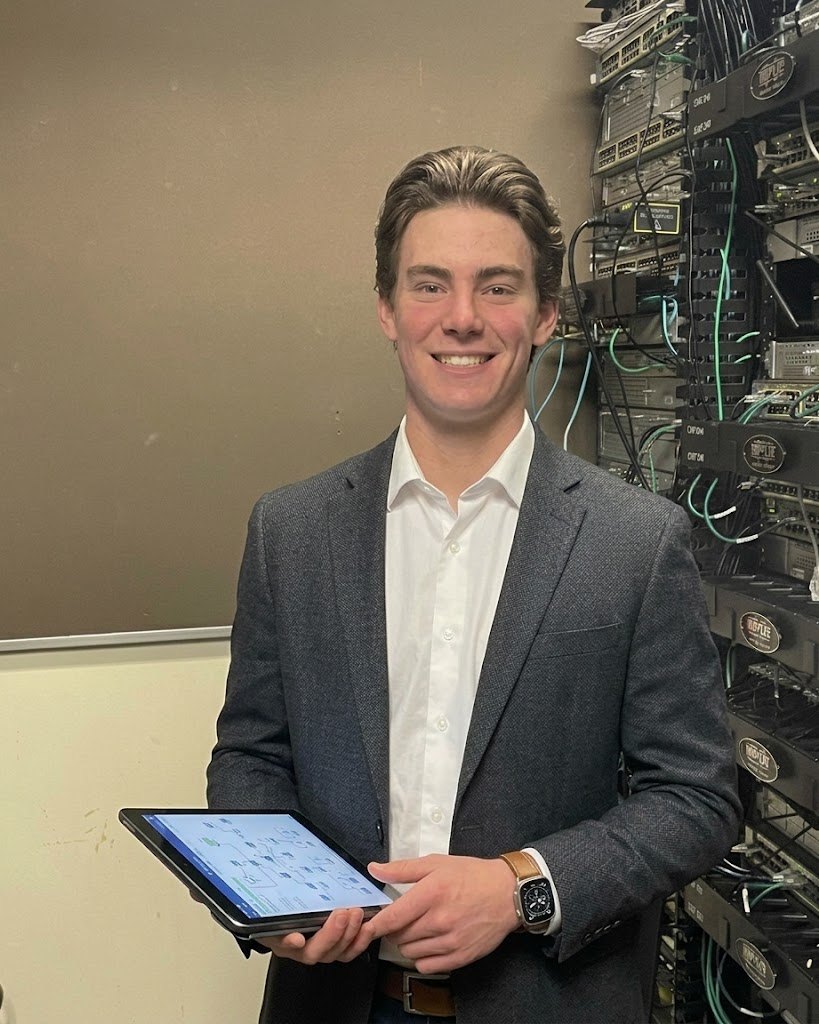
Brevin Buster in a blazer, holding a tablet, in front of a rack of network switches and fibre
In the rack room.

How I work

Foundation first. Identity, networking, and logging are set up once, and everything after inherits them. I'd rather spend the first phase getting that right than fix it later underneath something already running.

Fixed fees, not hourly. Discovery is a flat fee, and you know exactly what it produces. Build work is quoted per workflow against what discovery found. You know the price before I start, not after.

The documentation is yours. Every project ends with runbooks and a data map, written well enough that you could hand the whole thing to another engineer. I'm not trying to make myself difficult to replace.

I'll tell you if you don't need me. If there's software you can buy that does the job, I'll say so during discovery, which is when it's cheap to hear.

Who it suits

Five to fifty people is where this fits best. Big enough that manual process is costing you real money, small enough that hiring an IT person doesn't make sense yet.

Professional services, healthcare, trades, nonprofits. The industry matters less than the pattern: a process that outgrew the spreadsheet it started in.

Regulated work is fine. If you handle protected data, the data map and the retention schedule are built in from the start rather than added at the end.

Next step

The fastest way to find out whether this is a fit is a short conversation.

brevin@bbclouddevelopments.com